
BUYING GUIDE
How to Choose an Agricultural Spraying Drone and Compatible Spare Parts
Choosing an agricultural spraying drone starts with understanding your field requirements. Tank capacity matters, but so do application settings, battery management, maintenance access and the availability of compatible spare parts.
For farmers, agricultural service providers and equipment dealers, the right choice should support both daily operations and long-term maintenance. A drone that meets your spraying needs today should also have a clear path for servicing and component replacement.
This guide explains what to consider when buying an agricultural spraying drone, which components deserve attention and how to check compatibility before ordering agricultural drone spare parts.
What Is an Agricultural Spraying Drone
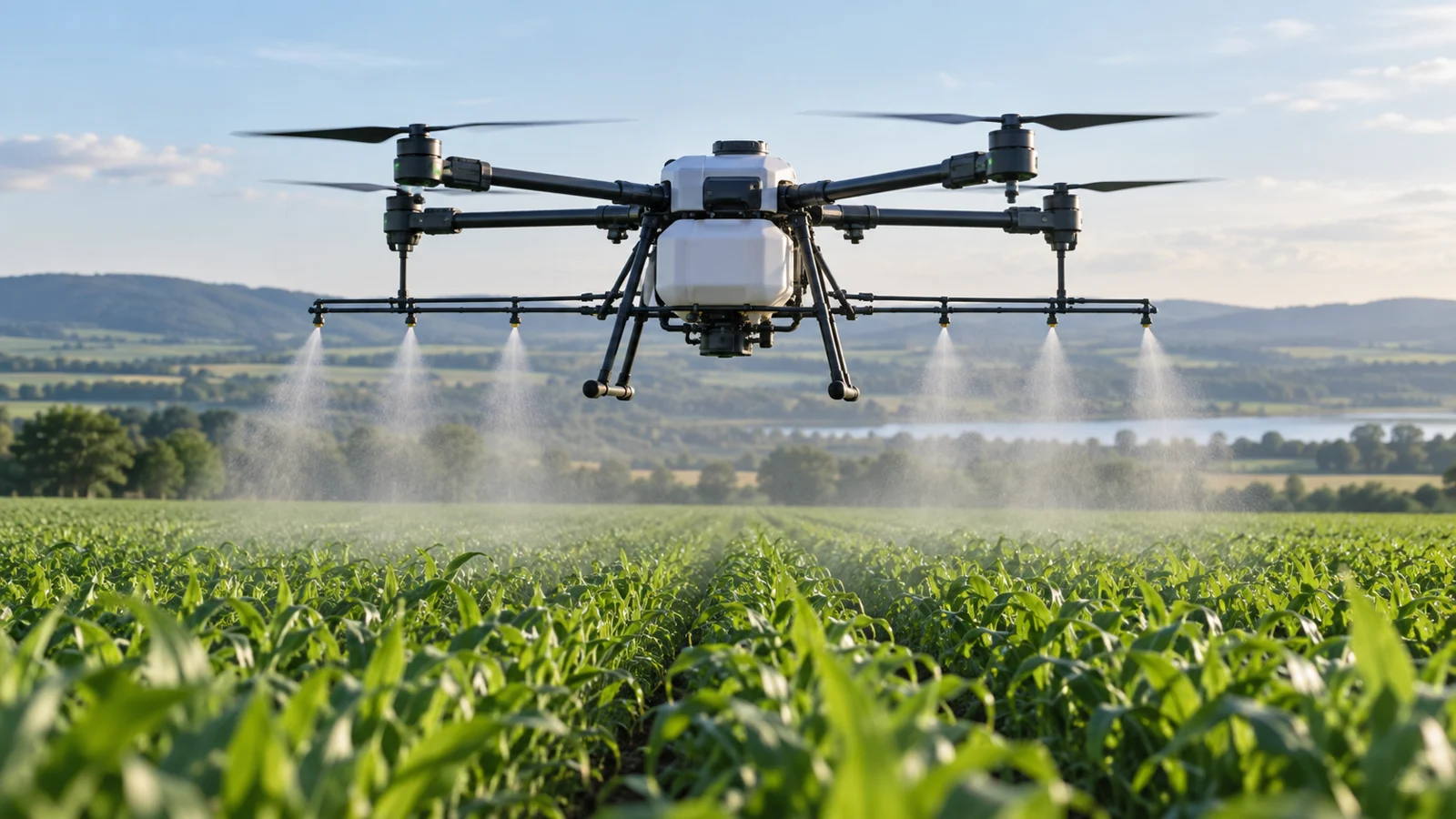
An agricultural spraying drone is an unmanned aircraft equipped with a liquid tank, spray delivery components and a flight control system. Depending on the equipment, application and local requirements, it may be used to apply approved crop protection products or other permitted agricultural liquids.
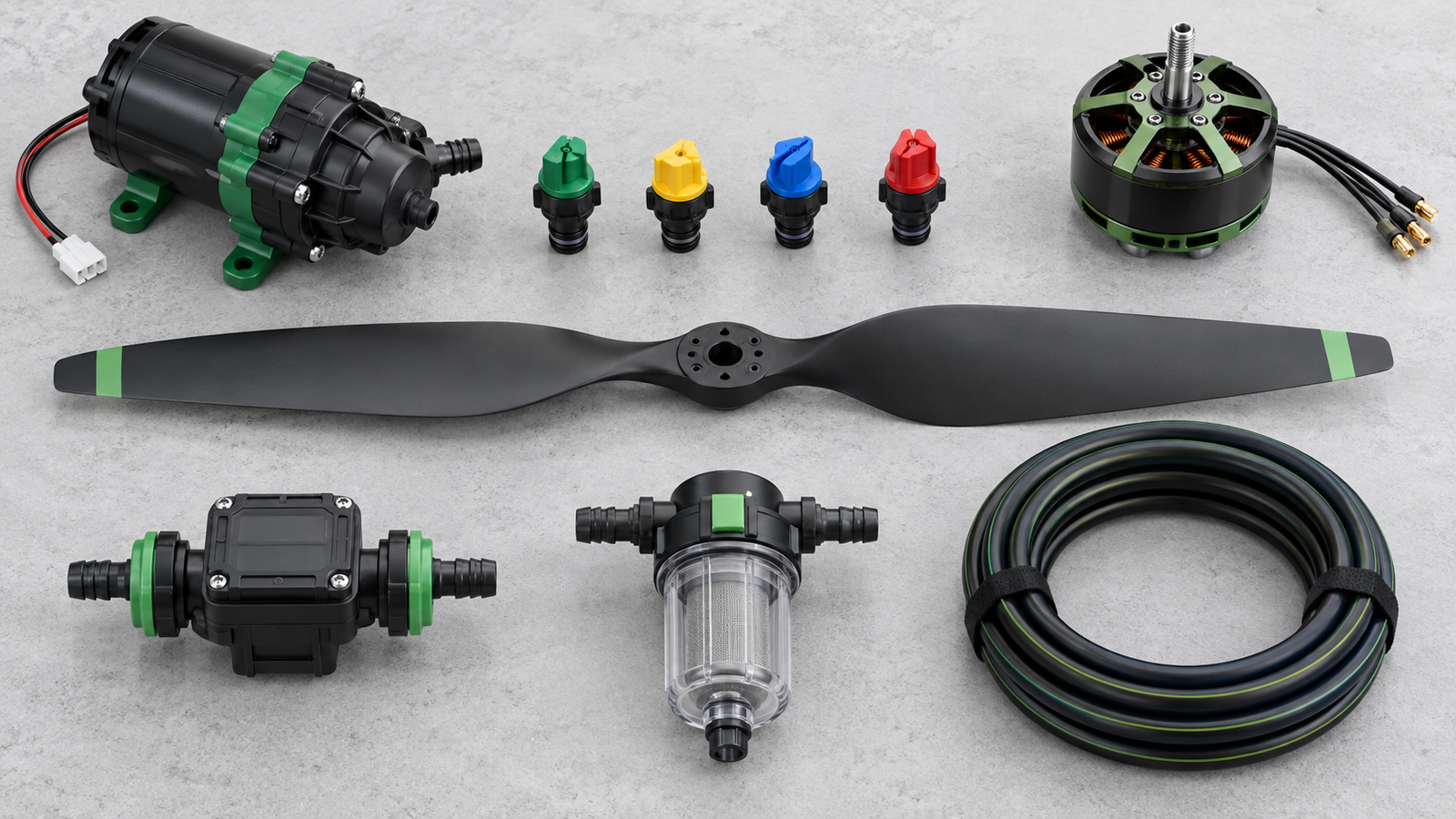
Typical spraying components include a pump, hoses, filters, nozzles or atomizers, and a flow measurement system. Some agricultural drone platforms also support a separate spreading system for compatible granular materials.
Spraying and spreading involve different equipment requirements. Before buying, confirm which functions the exact drone model supports and what additional components are required.
How to Choose an Agricultural Spraying Drone
Start With Your Crops and Field Conditions
Describe the work the drone needs to perform before comparing models. Consider the crops you grow, their growth stages, field size and shape, terrain, obstacles and access points. Review required application volume, product label restrictions and local requirements for drone operations and aerial application.
Also assess your access to water, charging facilities and transport. These factors help determine whether a particular drone and spraying system are suitable for your operation. A specification that looks attractive on a product page may offer limited value if it does not match your field workflow.
Evaluate Tank Capacity Alongside the Full Workflow
A larger tank may reduce refill frequency, but tank capacity alone does not establish daily productivity. Actual output also depends on application volume, operating speed, battery changes, refill time, field layout and permitted operating conditions.
When comparing agricultural spraying drones, ask how published performance figures were measured. Check the application rate, payload and field conditions used in any productivity claim. Assess the complete working cycle, from filling and flight preparation to landing, battery replacement and the next refill.
Check the Spraying System
The spraying system should support your intended application and the drone manufacturer's operating requirements. Review the following features:
- Supported application rate range and pump specifications.
- Nozzle or atomizer options and control requirements.
- Filtration, hose layout and access for cleaning.
- Flow measurement and calibration procedures.
- Materials compatibility with permitted spray liquids.
- Access for inspection and component replacement.
Do not choose a system on flow capacity alone. The pump, nozzles, controls and plumbing need to work together within the equipment's specifications.
Plan Battery and Charging Requirements
Battery management affects how smoothly a spraying operation runs. Before purchasing a drone, check its supported battery model, approved charger, power supply requirements and manufacturer guidance for charging and handling.
Consider how batteries will be transported, inspected and stored between jobs. Include charging equipment and battery replacement costs when comparing purchase options.
Batteries with similar dimensions or voltage ratings are not automatically interchangeable. Communication protocols, connections and system requirements can also affect compatibility.
Review Maintenance and Spare Parts Availability
Check how the equipment will be maintained before committing to a purchase. Ask whether the supplier can provide model-specific product documentation, clear spare part numbers, compatibility information and maintenance instructions.
Ask about replacement component availability as well. Accessible documentation and identifiable components make it easier to plan repairs and order the correct agricultural drone spare parts.
Agricultural Drone Spare Parts to Check
Spray Nozzles and Atomizers
Spray nozzles and atomizers influence how liquid is delivered. Selection should follow the drone manufacturer's guidance, the requirements of the intended application and applicable product labels.
Before ordering, verify the component type, mounting arrangement, supported operating range and any material requirements. Inspect these components according to the maintenance instructions. Uneven output or an abnormal spray pattern may require cleaning, further diagnosis or replacement.
Spray Pumps
An agricultural drone spray pump supplies liquid to the delivery system. Replacement requires more than matching the pump's appearance.
Compare the original part number, electrical requirements, connections, mounting points, control interface and specified flow or pressure characteristics.
If output becomes inconsistent, check the broader system before replacing the pump. Filters, hoses, connections, air leaks and calibration can also contribute to spraying problems.
Motors and Propellers
Motors and propellers form part of the drone's propulsion system. Their specifications need to match the aircraft and the relevant position on the airframe.
Verify the approved part number, rotation direction where applicable, mounting details and manufacturer requirements. Follow model-specific instructions for installation and any required checks. Seek qualified service assistance when a repair falls outside the operator's training.
Batteries and Chargers
Use batteries and chargers approved for the exact drone system. Confirm the model number, connectors, communication requirements and supported charging equipment.
Follow the manufacturer's instructions for inspection, charging, storage and handling. A battery showing damage or abnormal behavior should be handled according to the manufacturer's safety guidance.
Flow Meters Filters and Hoses
Flow meters help the system monitor liquid delivery. Filters and hoses support the movement of liquid through the spraying system.
When selecting replacements, check dimensions, connections, material suitability and model compatibility. Flow meters may also have electrical, communication and calibration requirements.
If readings or output appear incorrect, inspect the system and follow the troubleshooting procedure before deciding which component needs replacement.
Radar and Other Sensors
Radar modules and other sensors can have model-specific mounting, wiring, firmware and configuration requirements.
A matching connector does not establish compatibility. Check the exact drone model, supported software version and installation documentation before ordering.
Spreading System Components
For agricultural drones with a supported spreading system, replacement components may include dispensing parts, motors, plates and related assemblies.
Check the spreader model separately from the aircraft model. Component selection and setup should follow the manufacturer's guidance for the intended material.
How to Verify Spare Parts Compatibility
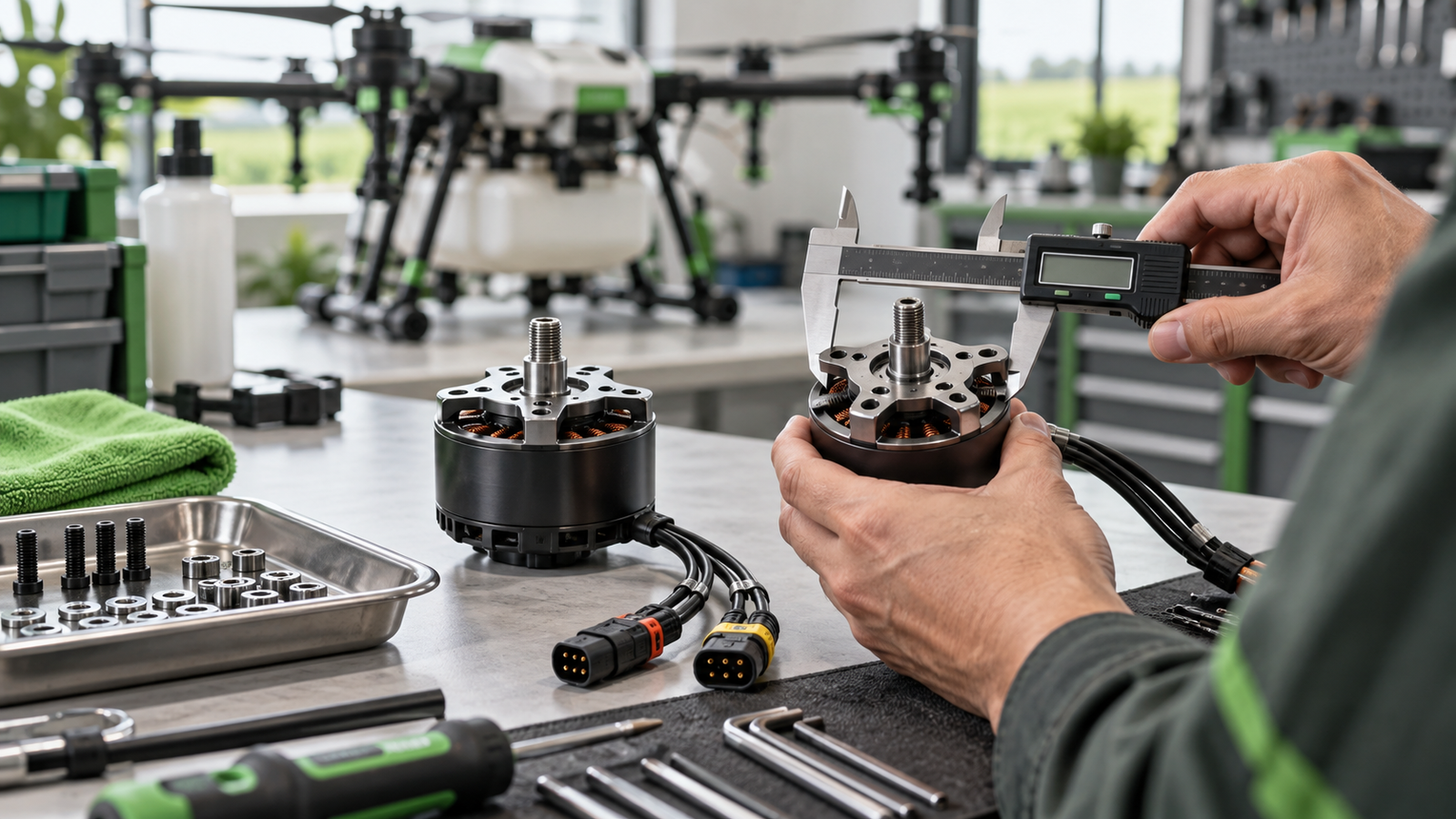
Before ordering agricultural drone replacement parts, collect the following information:
| Information | What to provide |
|---|---|
| Drone identification | Brand, exact model and relevant hardware version |
| Original component | Part number and clear label photographs |
| Physical details | Mounting points, dimensions and connector photographs |
| Technical requirements | Relevant electrical, flow, pressure or communication specifications |
| Problem description | Symptoms, error messages and when the issue occurs |
| Previous changes | Relevant repairs, component replacements or software updates |
Send this information to the supplier and request confirmation for the specific component.
For third-party parts, ask what compatibility documentation is available and whether any installation or configuration requirements apply. Avoid assuming that a part fits every drone from the same brand.
Maintenance Practices That Support Reliable Operation
Use the maintenance schedule and inspection procedures for your exact drone model.
Before operating, complete the required checks for the airframe, propulsion components, batteries, spraying system and sensors. Look for damage, loose connections, leaks or other conditions identified in the manufacturer's checklist.
After spraying, follow the equipment cleaning instructions and the relevant product label requirements. Handle residues and cleaning liquids according to applicable local rules.
Keep a maintenance record that includes inspections, faults, repairs, replaced part numbers and calibration work. These records can help identify recurring problems and support future parts selection.
Compare Ownership Costs Before Buying
The purchase price is only one part of owning an agricultural spraying drone. A practical cost comparison should include batteries, charging equipment, routine service, replacement components, training, transport and potential downtime.
Ask for current pricing and availability for commonly serviced parts. Where appropriate, plan a small stock of approved maintenance items based on your equipment and workload.
Replacement decisions should consider the drone's condition, repair requirements, remaining service support and expected operating needs.
Frequently Asked Questions
Are Agricultural Drone Spare Parts Universal?
Most parts require model-specific compatibility checks. Similar appearance, dimensions or connectors do not confirm that two components are interchangeable.
How Do I Choose the Right Spray Nozzle for My Drone?
Start with the nozzle types supported by your spraying system. Then review application requirements, product labels and the manufacturer's guidance for operating settings.
Should I Replace a Pump When Spray Output Becomes Uneven?
Uneven output does not confirm a pump fault. Follow the troubleshooting procedure and check filters, hoses, delivery components, connections and calibration before replacing parts.
Can I Install Replacement Parts Myself?
This depends on the component, your training and the manufacturer's service requirements. Use the applicable instructions and seek qualified assistance for work beyond your competence.
What Should I Send a Supplier When Requesting a Replacement Part?
Provide the exact drone model, original part number if available, clear photographs of the component and connectors, and a description of the fault.
Find Agricultural Drones and Spare Parts for Your Operation
Choose equipment around your application requirements, field workflow and maintenance plan. When buying replacement components, verify the exact model and part specifications before ordering.
Explore Hnvuxs agricultural spraying drones and spare parts, or send an inquiry with your drone model, component photographs and application requirements.